Discover the Wonders of Africa with MIDAS. Let's embark on a journey of discovery and adventure together!
The Ashanti Region is the cultural heartbeat of Ghana. Land of the Golden Stool expressed in the language, passage rites, festivals, cuisine and ordinary day-to-day activities.
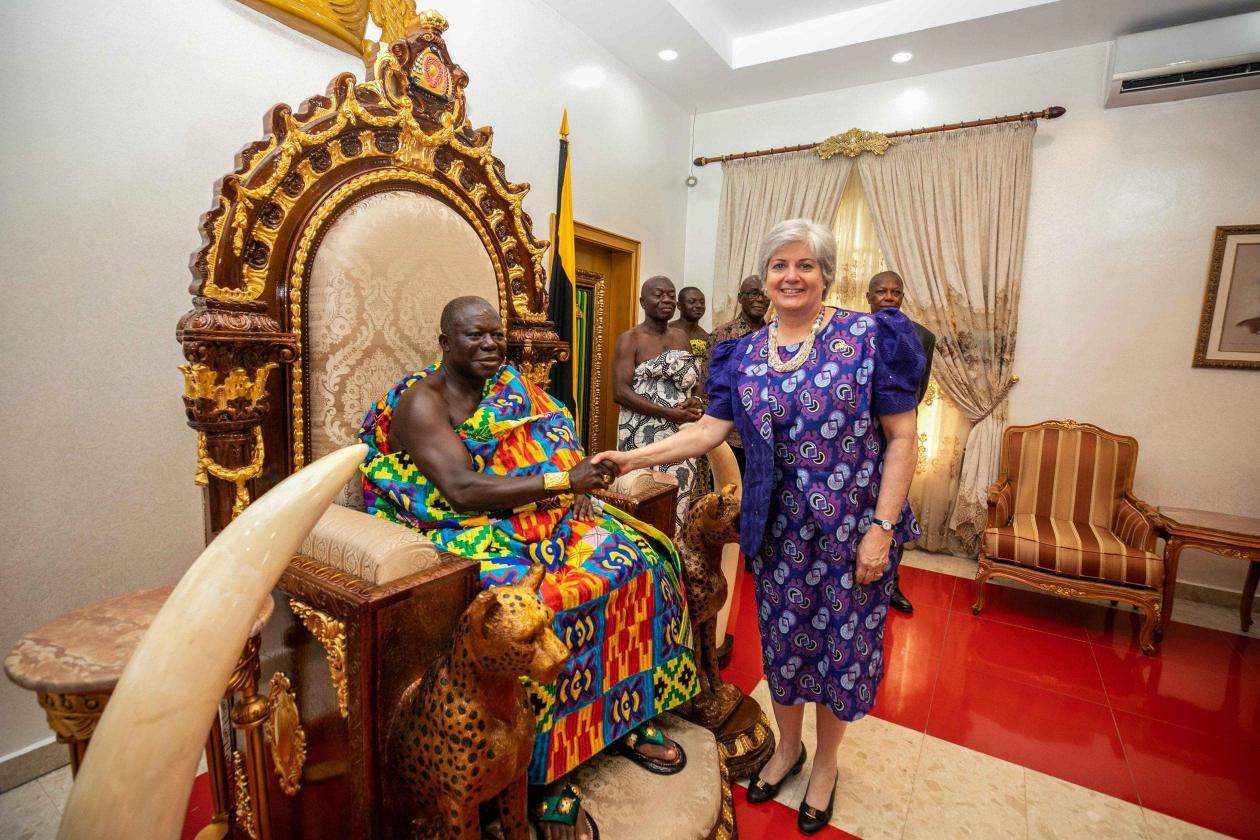
Visitors can participate in several traditional events such as funerals, naming ceremonies. Royal Akwasidae held every six weeks at the Royal Palace of the Asante King, Otumfuo Osei Tutu II.
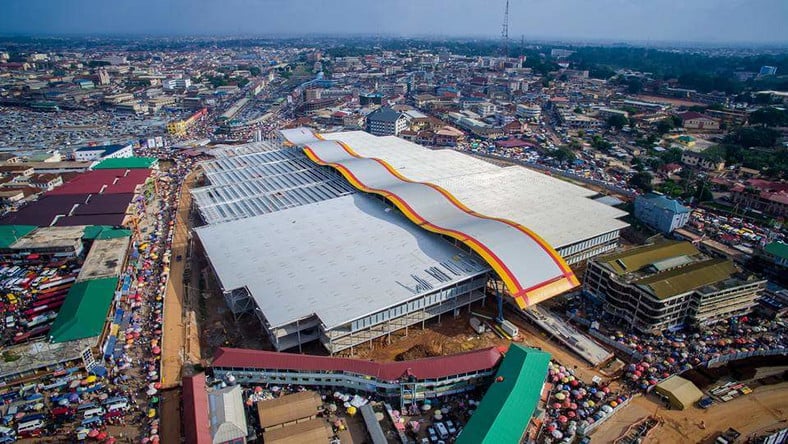
The scenic and hilly capital city of Kumasi is a vast tropical rainforest belt. Still forest country, dominated by impressive buttress rooted forest giants, alongside large cocoa farms and picturesque hillside settlements.
Beautiful weather; chilly in the mornings, bright, clear and sunny in the afternoons for most of the year and cool nights provide ideal conditions for visitors to; experience this exciting colourful world of hearty hardworking people.
Ashanti is also home of the most important god mine in Ghana at Obuasi (50km south-west of Kumasi). Surface visits can be arranged, and the town still has air of the gold rush days of the 1890s.
Throughout Ashanti (and especially in Kumasi) you will find welcoming hotels and restaurants, while in the main town’s nightlife and entertainments are first class. Sporting facilities are available in the urban areas, while exciting fishing can be enjoyed in our lakes and rivers.
To discover the traditional heartland of Ghana, a visit to Ashanti is a must.
Ashanti Region is well connected by road, rail and air. Inter- City/STC and Neoplan buses shuttle hourly between Kumasi and Accra daily. Similarly, other regional capi- tals and major towns can be reached by buses (or trotros) from Kumasi. Situated on the apex of the railway network, the Ghana Railway Corporation operates comfortable passenger trains from Kumasi to Accra and Kumasi to Takoradi.
Restaurants and fast food outlets provide both international and Ghanaian dishes. Visitors may sample tasty indigenous Ghanaian meals, Indian or Chinese delicacies as well as continental dishes. Local eating places (or Chop Bars) are found in most parts of the Region.
A variety of options from open-air drinking bars, street side cafes, casinos, to night clubs and theatres are available. Contact the Ghana Tourist Board for a list.
Remember, whenever you choose to visit, you will be greeted with warmth in the word of welcome “AKWAABA”
ATTRACTIONS & EXCURSIONS IN Kumasi and the Asante heritage
Kumasi is the capital of the Asante kingdom and the local highlights are:
George Ekem Ferguson was a Ghanaian colonial agent who was instrumental in convincing local chiefs to sign treaties of friendship with the British. He was later (1897) killed by slave raiders, but his tomb is preserved in Wa.
The ‘unmovable’ Sword of the Komfo Anokye remains in the grounds of the Okomfo Anokye Teaching Hospital, where he pushed it. It is believed the Okomfo pronounced that no one would be able
to remove the sword, and so it has remained in spite of many attempts.
These final resting places of Ashanti Royalty can be seen at Bantama and Breman and may be visited with the consent of the Manhyia Palace.
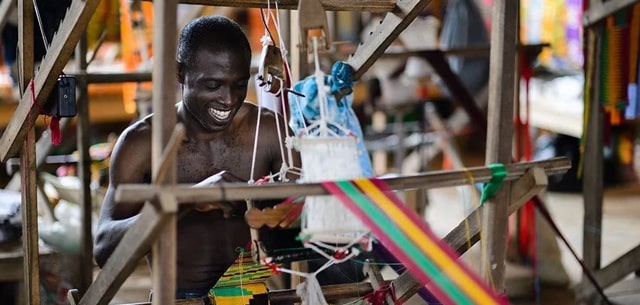
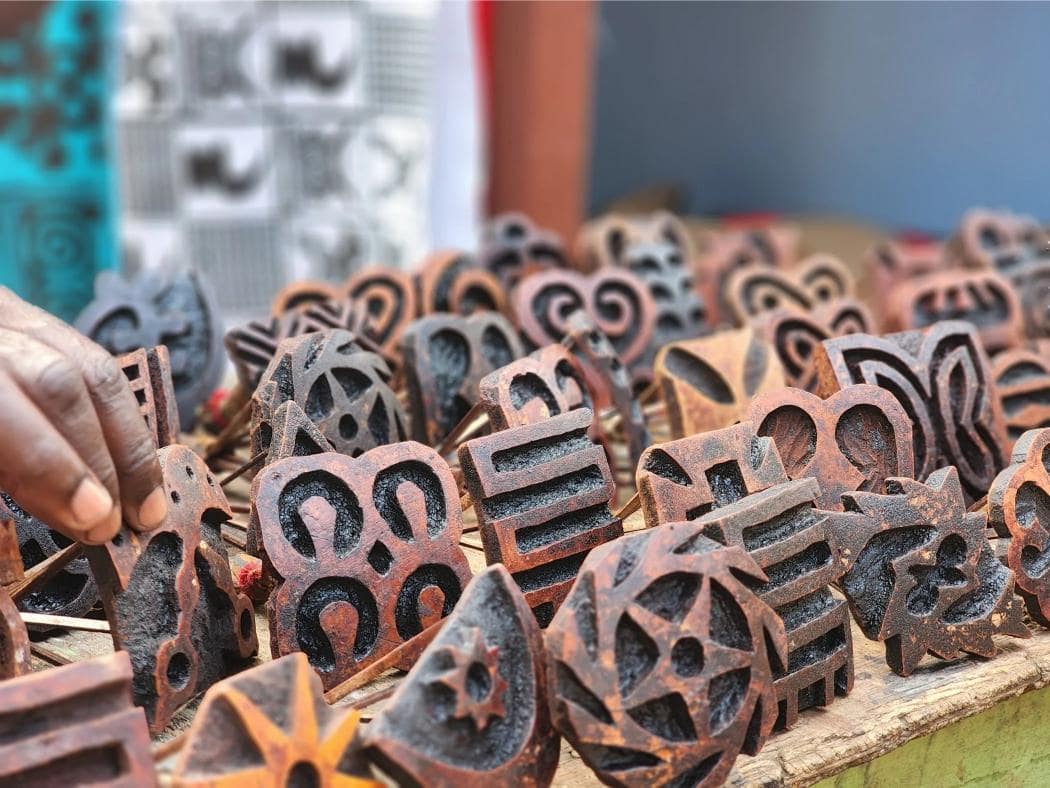
The crafts villages surrounding Kumasi include: Bonwire – (18km NE of Kumasi) Kente weaving Pankrono- (3km N of Kumasi) Pottery Ahwiaa (6km N of Kumasi) Wood carvings Ntonso – Adinkra cloth making Asuofia/Asamang (Barakese Road) bead making Ampabame Krofrom (10km from Ahodwo) Brass smithing, Goldsmiths and Silversmiths can be seen in Kumasi.
Pankrono is located 8 km on Mampong Road. Renowned for its distinctive and colourful pottery created through transitional process without the use of the potters wheel.
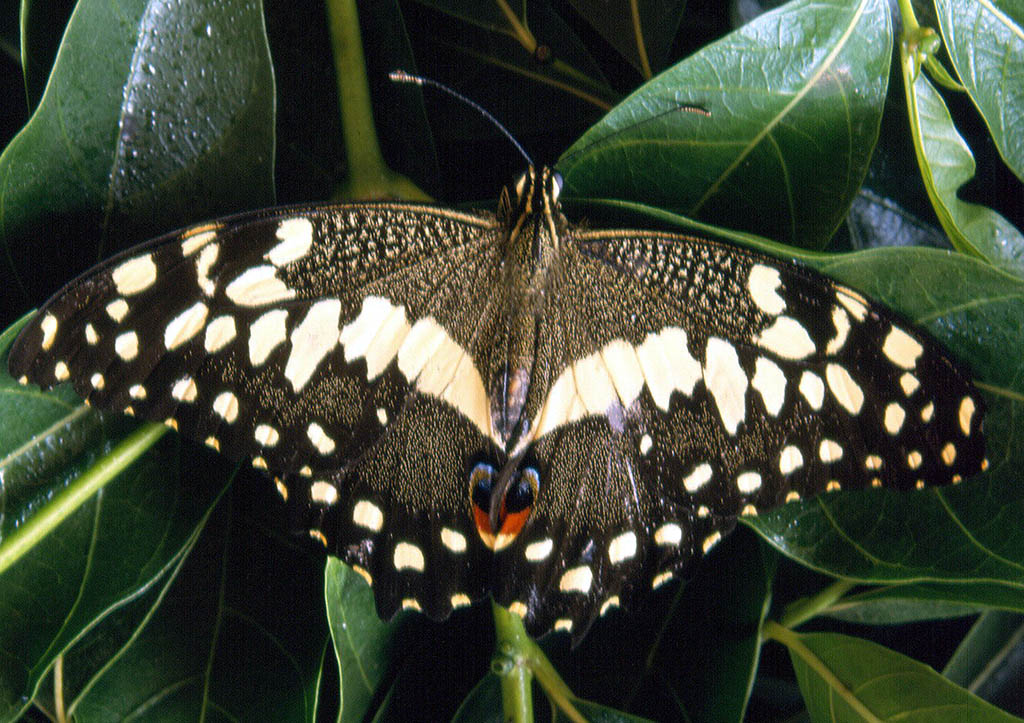
Located 20km on the Kumasi – Accra highway, a quiet research centre for the Forestry Research Institute showcasing an arboretum, forest hiking trails and a butterfly sanctuary. Lodging, guiding and
interpretative materials are available
About 80km northeast of Kumasi. The reserve showcases a rare tropical landscape, vibrant waterfall and a wide variety of bird and animal life. Assistance and clearance is available at the Wildlife
Division Office.
Occupying 3.478 square kilometres of undulating terrain on the western shore of the Volta Lake. Made up of predominately Guinea Savannah Woodland and gallery forest along the major rivers, complete with sandstone inselbergs. Has at least six primate species, black and white colobus monkeys and baboons, elephants and a variety of antelope species, crocodiles, buffalos, water bucks, hartebeests, warthogs, Manatee and clawless otters and are also reported to be present.
This nature reserve protects about five species of monkey.
Formerly, Kumasi’s only source of drinking water was the Owabi River, located to the west of the city. When the river was dammed to create a reservoir, the resulting watershed extended deep into the city’s nearby forests. The reservoir and forest have since become the natural habitat for many species of the region’s wildlife, as well as for a number of migratory birds.
It is located 31km southeast of Kumasi. A picturesque meteorite Crater Lake surrounded by dozens of virgin fishing and farming villages. The Lake Basin is ideal for mountaineering, diving, swimming and relaxation. Accessible by road from Kumasi.
Located in the Centre for National Culture ground, the museum houses a fascinating collection of Ashanti History such as memorabilia of Okomfo Anokye, including the 300 years old antique treasure bag which he forbade anyone to open.
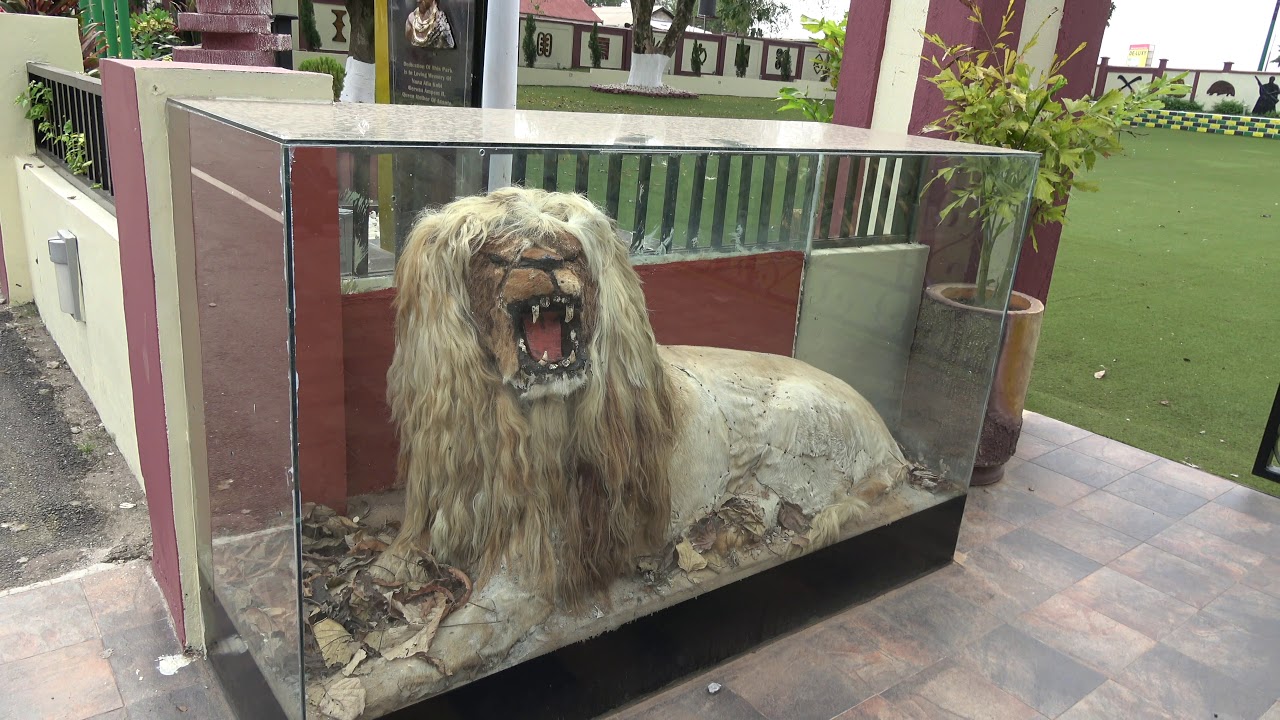
This is the official residence of the Asantehene. Its large courtyard and museum hold statues of past great kings and queens of the Asante Kingdom.
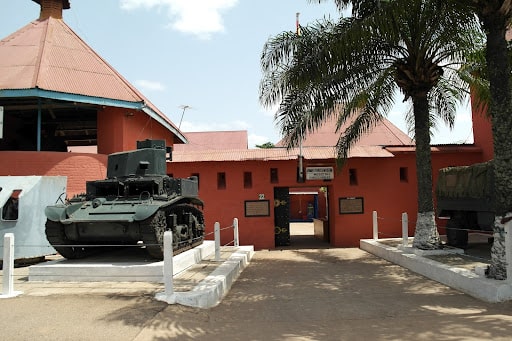
This Museum exhibits materials that primarily concern the British- Ashanti war of 1900, World War II and Ghana’s recent military history. On display are maps, old photographs, and military regalia.
This is a very important, albeit rare celebration of the Ashanti’s. It is held in a large open space in the capital city of Kumasi. The festival is normally well attended and embraced by Ashanti’s from all walks of life.
Basically, the Adae Kese celebrations are magnified forms of Sunday Adae festivals, celebrated every six weeks in accordance with the Akan ca lender which is based on a cycle of forty- two days and nine months in a year. Invariably, the last Akwasidae festival is set aside for the celebration of Adae Kese.
Adae Kese is usually held to climax celebrations of specific milestones and achievements of the Asante kingdom. it was first celebrated to mark the attainment of statehood of a newly celebrated people, in the aftermath of the Ashanti war of independence, otherwise known as the “”Battle of Feyiase””, which was fought against the Denkyiras between 1697 and 1699. Adae Kese, like other Akwasidae events, serves as the platform for pledging allegiance to the kingdom and to affirm loyalty to the occupant of the Golden Stool which represents the unity and embodiment of all Ashanti.
The event is marked in two phases. There are solemn private observances which are performed at the King’s palace chambers by accredited members of the royal family and other functionaries. It includes rituals, aimed at cleansing the spirit of the incumbent King and the presentation of ceremonial sacrificial meal (Esq.) and drinks to ancestral spirits. Their blessing and protection guide the kingdom to prosperity.
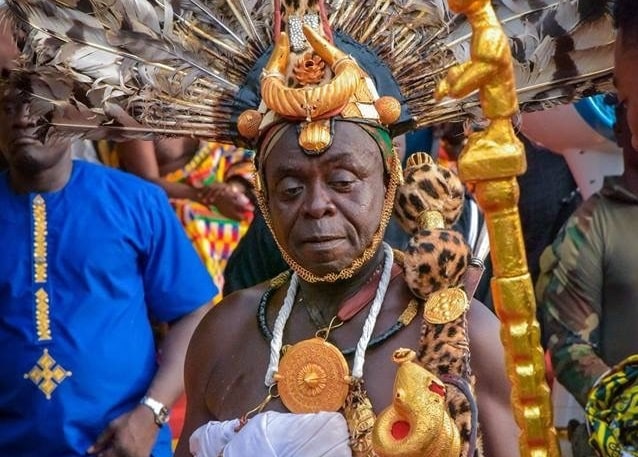
The public celebrations take the form of a colourful durbar of chiefs and queen mothers presided over by the Asantehene. It involves the display of cherished regalia and paraphernalia accompanied by traditional drumming and dancing as well as firing of musketry amidst pomp and pageantry.
The Adae festival is a continuous demonstration of faith in the vision and heritage of the Asante Kingdom, which has existed since the introduction of the Golden Stool in 1700.
The festival is also to commemorate and re-enforce the independence of the Ashanti people and an occasion to re-affirm each state’s loyalty to the confederacy instituted in the aftermath of the Ashanti war of independence fought against the Denkyeras between 1697-1699. It provides a platform for the King to meet and share his thoughts with his sub-chiefs and subjects and also reward deserving ones.
Time your visit to coincide with an Akwasidae Festival, (Sunday Adae). You can determine the Akwasidae dates by counting 6 weeks down the calendar from 1 Adae. For example, in 1991 the dates were: January 6, February 17, March 31 May 12, June 23, August 4, September 15, October 27, December 8.
Celebrated on an Akwasidae date, mostly in March in Kumawu, (Sekyere East District), an activity begins with sacrificial rituals on the eve of the actual day. The day starts with a mini durbar of chiefs presided over by the Paramount Chief of Kumawu. Then comes a procession of the chiefs and traditional militia warrior group to ‘PAPASO’. This is where the sacrificial cow is slaughtered. Anyone can have a piece of this cow if one can withstand the beatings and heckling that characterises attempts to secure a portion of the meat. This display of valour and endurance is part of the festival. The Festival reminds the chiefs and people of the Kumawu area of the bravery of their ancestors, especially, Nana Tweneboah Kodua I, who offered himself as ransom in order that the Ashanti’s emerge victorious in the battle of independence fought against the Denkyiras. The festival also seeks to purify the state by driving off evil spirits, which may hinder the search for elephant tusks, which are important paraphernalia of the royalty.
Celebrated in July/ August in Bonwire, (Ejisu-Juaben District). A colourful assembly of local chiefs and people of Bonwire, where participants adorn themselves with beautifully woven Kente clothes and designs which they have created.
The significance of the Kente festival is to commemorate the origin of the Kente cloth, Bonwire, over 300 years ago. The festival also seeks to assert the influence of the Kente as an exclusive cloth from this part of the world.
It is celebrated in August by the Ejisu, (Ejisu-Juaben District). A durbar of chiefs presided over by the paramount chief of Ejisu Traditional area.People from all walks of life call to pay homage to the memory of Nana Yaa Asantewaa the brave Ashanti war heroine and those exiled to the Seychelles with her.
In 1900, at the advanced age of 60-plus and defying the mores of a woman’s role in her society, Yaa Asantewaa, the queenmother of Edweso (or Ejisu, English spelling) stepped out of the shadows to lead an army of 20,000 men to resist British imperialism in what is now known as the Yaa Asantewaa War.
The Asante nation, to which Yaa Asantewaa belonged, fiercely resisted British attempts to colonise their territory. At the height of its glory, the Asante Empire (which came after the collapse of the earlier empires of Bono and Denkyira), encompassed over 70% of present day Ghana, and could boast one of the most advanced systems of government on the continent.
The central location of the capital, Kumasi, also gave it strategic control of lucrative trade routes, enabling it to grow rich and powerful on the slave trade, as well as in gold mining.
However, by 1896, the seemingly invincible empire had been greatly weakened after several wars with the British, who were intent on bringing the kingdom to heel. The Asantehene (king of the Asante), Prempeh I, and several of his powerful sub-chiefs and key generals had been captured by the British forces and sent into exile (first in Sierra Leone and then to the Seychelles)
A colourful durbar of chiefs accompanied by traditional drumming and dancing amid merry making and funfair and firing of musketry. To celebrate the bravery and wisdom of Nana Wiafe Akenten I, who chose a large piece of land instead of jewelry, when the king was rewarding the various divisions after war against the Dormaas of the Brong Ahafo region, which the Ashantis won. It is celebrated in October by the Offinso, (Offinso District).
Celebrated in the last Monday in November/1st Monday in December by the Essumeja, (Bekwai District). The performance of rituals and durbar of traditional leaders at a site. In the Asantemanso forest, known to be the ancestral origin of the Asantes.
The significance of this festival is to mark the emergence of the first seven Asante ancestors from a huge hole in the ground, marking the origin of the Ashanti’s.
Description:
Among its protected species, Bomfobiri Wildlife Sanctuary takes pride in housing the rare bare headed rock fowl. Bomfobiri is a showcase of a rare tropical landscape
It is located at about 30km from Kumasi. It is to the west of Mampong Hills.
Size:
It covers an area of 53km2
Vegetation:
It is mostly secondary semi-deciduous forest containing areas of more open savannah with sandstone outcrops.
Key fauna:
Bare headed rock fowl, 3 species of crocodile, 26 species of mammals including red river hog, wide range wildlife
Other Features: Vibrant Waterfalls
Ghana Armed Forces Museum (exhibits materials that primarily concern the British-Ashanti)
-Manhyia Palace & Museum (official residence of Ashantehene)
-Prempeh II Jubilee Museum
-The Tano and Buoyem Sacred Groves features fabulous rock formations. The source of Tano River begins from the grove
-Lake Bosomtwe (a meteorite crater lake)
-Digya National Park
-Kumasi Zoo
Communities: Bonwire is located about 18km from Kumasi on Mampong road. A settlement for hundreds of Kente weavers
Foase Atiwa is located 20km on Kumasi-Ohwimasi (Trabuom) road. The community is specialized in woodcarvings
Ahwiaa is located 9km on Mampong road. Specialized in woodcarvings
Pankrono is located 8km on Mampong road. Renowned for its distinctive and colourful pottery
Nkyidwo festival celebrated in the last Monday in November/ 1st Monday in December by Essumeja (Bekwai District)
Yaa Asantewaa festival. It is celebrated in August by the Ejisu (Ejisu-Juaben District). A durbar of chiefs presided over by the paramount chief of Ejisu traditional area
Access:
It can be accessed by road through Kumasi-Mampong road. 30km south-east of Kumasi and to the west of Mampong Hills
Time for Visit: Throughout the year
-Komfo Anokye Teaching Hospital (Kumasi)
-Radiant Medical and Dental Center (Ayigya-Kumasi)
-Agogo Hospital (Agogo)
-Digya National Park
The Digya National Park was gazatted in 1971 and covers an area of 3,478 km2 of undulating terrain with sandstone inselbergs. It is situated on the western shores of the Volta Lake. Guinea savanna woodland predominates with gallery forest along the major lines. The Park supports at least six primate species including black and white colobus, elephants and a variety of antelopes. Manatee and clawless otter are also reported to be present in the Park.
Digya is the historical home of two currently extinct large mammals,: the black rhinoceros, locally known as the naree , and the gregarious wildebeest, locally called the gnoo (gnu) the manatee omit pr sea cow is the Park’s emblem.
Description:
Owabi can best be described as a secondary forest surrounding a large water reservoir. It is a tranquil site with a great variety of birdlife and fascinating forest walks. It an ideal place for winter migratory birds and hundreds of Mona Monkeys
It is located west of the regional capital of Ashanti, Kumasi.
Size:
It covers an area of 13km2
Vegetation:
The vegetation is that of a secondary forest
Key fauna:
Birdlife including noisy pied hornbill, herons and Kingfishers, Mona Monkeys, antelopes which are rare because of their extreme shyness.
Other Features:
Opportunity to observe a fine, well preserved forest
-Manhyia Palace & Museum (official residence of the Ashantehene)
-Lake Bosomtwe (is located 31km from south-east of Kumasi. A picturesque meteorite crater lake)
-Owabi Wildlife Sanctuary
-Kumasi Zoo
-Atiwa Rock formations located in Nsuta, offers a beautiful view of Kumasi
Bonwire is located about 18km from Kumasi on Mampong road. A settlement for hundreds of Kente weavers
Foase Atiwa is located 20km on Kumasi-Ohwimasi (Trabuom) road. The community is specialized in woodcarvings
Ahwiaa is located 9km on Mampong road. Specialized in woodcarvings
Pankrono is located 8km on Mampong road. Renowned for its distinctive and colourful pottery
Kente festival is celebrated in July/ August in Bonwire (Ejisu-Juaben District)
Bird-watching, hiking/ nature walk
Access: By road, it is easily reached from west of Kumasi
Time for Visit: Throughout the year
Safety Tips:
Light clothing is recommended in the dry season
Heavy clothing is recommended in the raining season.
Visitors who want to visit this site must bring their own tents, mosquito net, mosquito repellent, sleeping pads and/ or cots for use at the campsite
Health Facility:
Komfo Anokye Teaching Hospital (Kumasi)
Radiant Medical and Dental Center (Ayigya-Kumasi)
Agogo Hospital (Agogo)
Discover the Wonders of Africa with MIDAS. Let's embark on a journey of discovery and adventure together!