Discover the Wonders of Africa with MIDAS. Let's embark on a journey of discovery and adventure together!
The Northern Region, one of the ten administrative regions of Ghana, a country lying on 0 longitude of the West Africa Coast. Ghanaian hospitality is legendary, the Northern Region is no exception. And so you are welcome to enjoy the scenic natural features, exotic culture and the legacies of a history of the largest region in Ghana.
Northern Region has 13 of the 110 district of the country. Its goegraphical features are mostly low lying, except in the north eastern corner with the Gambaga escarpment and along the western corridor. The land is drained by the tributaries of the Volta Lake: Rivers Nasia, Daka, Oti, the Black and White Volta covering over a third of the whole land mass of the 70,390km big enough to swallow up other regions like Volta, Ashanti, Western and Greater Accra put together; call it the mother of all Regions!
The region if bounded on the north by the Upper East and Upper West regions, on the west by Cote D’Ivoire and on the east by Togo. The regions on the south are the Brong Ahafo and Volta regions.
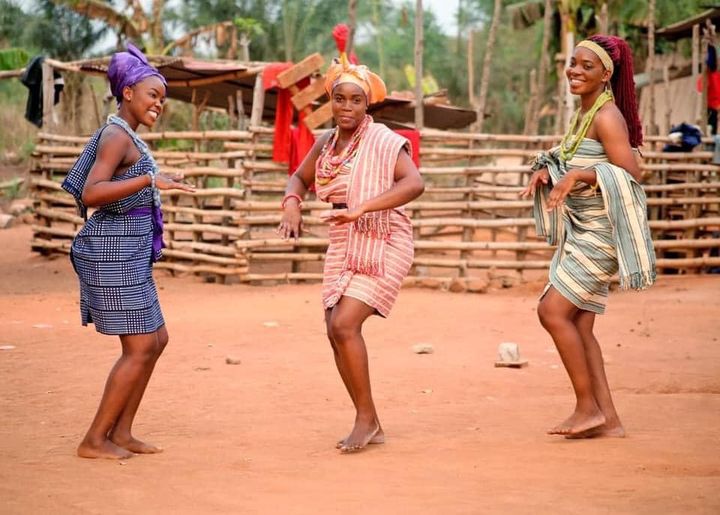
With population of nearly 2 million, the main ethnic groups are Dagomba, Nanumba, Mamprusi, Gonja and Komkombas. Other groups include Chekosis, Bimobas and Vaglas.
Tamale, the capital, is the country’s fourth largest city. It is the nerve centre of all commercial activities in the whole of the Northern Sector of Ghana. Tamale is an incredible juxta-position of the ancient and modern. The traditional architecture of round huts with conical thatched roofs are sights to see.
The rains come between May and October followed by the dry season which peaks in December and January with the dry Harmattan winds from the Sahara Desert. This tropical climate sustains the Guinea Savanna vegetation made up to grassland, clusters of shrubs, short trees and a sprinkling of big trees like mahogany and baobab. Maximum temperature levels of about 38oC occur in March to April and minimum temperature levels of about 19oC in January.
4840km² of savannah and rocky outcrops that are home to 93 species of mammal, including herds of elephant, buck and small plains game. The occasional lion and leopard can be seen resting after a kill, and the range of bird life (approximately 300 species) is considerable.
A 13th century mosque, believed to be first built by Moorish traders, it is one of the holiest site in Ghana. Its distinctive façade has been widely photographed.
Nearby is a mysterious boulder that is the subject of a splendid local legend
89km west of tamale, Daboya is the 16th century town from the Gonja Kingdom, and a famous source for hand made textiles.
Said to be built in the 16th century to protect Nalerigu (120km from ‘Bolga’) from raiders, this has now been recognized as part of the slave route.
The slave route is recognized at Salaga, where the Trans-Sahara caravans paused in Salaga market. Leg pegs can still be seen in the market place.
96km East of Tamale, Yendi was part of a 19th century German settlement. Many of the Germans who died in battle with the Dagomba people are buried in the cemetery. The grave of the slave raider Batafu is said to be near here.
It is celebrated by the chiefs and people of Gonjaland in April every year. The capital of the Gonja Traditional Area, Damango, serves as the epicentre of the entire celebration.
Among activities to mark the festival is the procession at night with torches into the bush or outshirts of towns and villages within Gonjaland. There are also Koran recitals to forecast the new year.
The Damba festival is categorized into three main festivals, namely:
*Somo Damba
*Naa Damba
*Belkusi Damba
It is celebrated under the lunar calendar by the people of Dagbon, Mamprugu, Gonja, Mamprugui, Nanumba.
The significance of the festival is to commemorate the birthday of the Holy Prophet of Islam. Activities includes prayers and fasting and procession of people on horseback, amidst drumming and dancing.
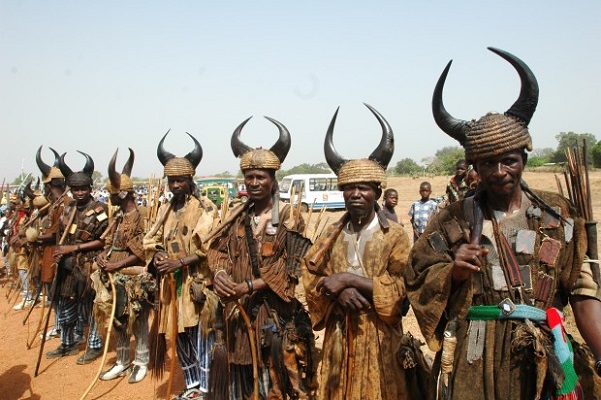
Originally linked with Islam to mark the birth of Mohammed, the festival has gradually taken on a traditional rather than Islamic tone. The 2-day festival is full of pageantry and showmanship and is celebrated in the towns of Dagbon, Gonjaland, Mamprusiland and Nanumbaland.
Although the Bugum Festival was also linked with Islam, it has become a major event on the traditional calendar too. It commemorates the flight of Naiyul-Lah Mohammed from Mecca into exile in Medina in AD658. The festival is celebrated in Dagbon, Gonja, Mamprusi and Nanumba. The events begin with processions from neighbouring villages. By nightfall, all the villagers converge at the Chief’s palace with lighted torches. Following special invocations by the Chief, the ceremonial illuminate the streets. Festive drumming and dancing continue until the early hours of the morning.
The Kpini Chugu is observed in the Dagbon, Mamprugu and Nanung Traditional Areas as a minor festival. These areas are made up of Dagombas, Mamprusis, Nanumbas, Kokombas abd Basaris. There is no general celebration. It is observed as a harvert offering to the gods.
Gobandawu marks the beginning of the new harvest season by the traditional areas in the Northern Regions.
The main activity is the sacrificial offering of yams and guinea fowl to in-laws.
The significance of this festival is to give thanks to the gods for a good harvest.
One hundred seventy kilometres west of Tamale in the West Gonja District, is the Mole National Park. The scenic ride to Mole, though rough, is ideal for adventurous visitors.
The largest of Ghana’s National Parks and situated in the heart of the Guinea savannah woodland ecosystem, it is home to 93 mammalian species, 33 reptiles nine amphibians and an estimated 300 birds species. The mammals include some 600 elephants, 2,000 roam antelopes, 3,000 hartebeests, 4,000 waterbucks, 5,000 buffalo and some 6,000 warthogs. Uncounted lions, leopards, hyenas and various primates can also be seen in Mole. A total of 600km of game protection and viewing roads have been developed within the park. A basic 33-bed, no frills hotel facility, which overlooks an elephant bath, offers overnight accommodation and restaurant facilities. Additionally, composite facilities are available for visitors. A landing strip for small aircraft provides the option of air access to Mole.
Discover the Wonders of Africa with MIDAS. Let's embark on a journey of discovery and adventure together!